Build
Make the best responsible case for a claim. Define it, identify the purpose it serves and gather evidence that another person can inspect.
 LUX CREATIVE 969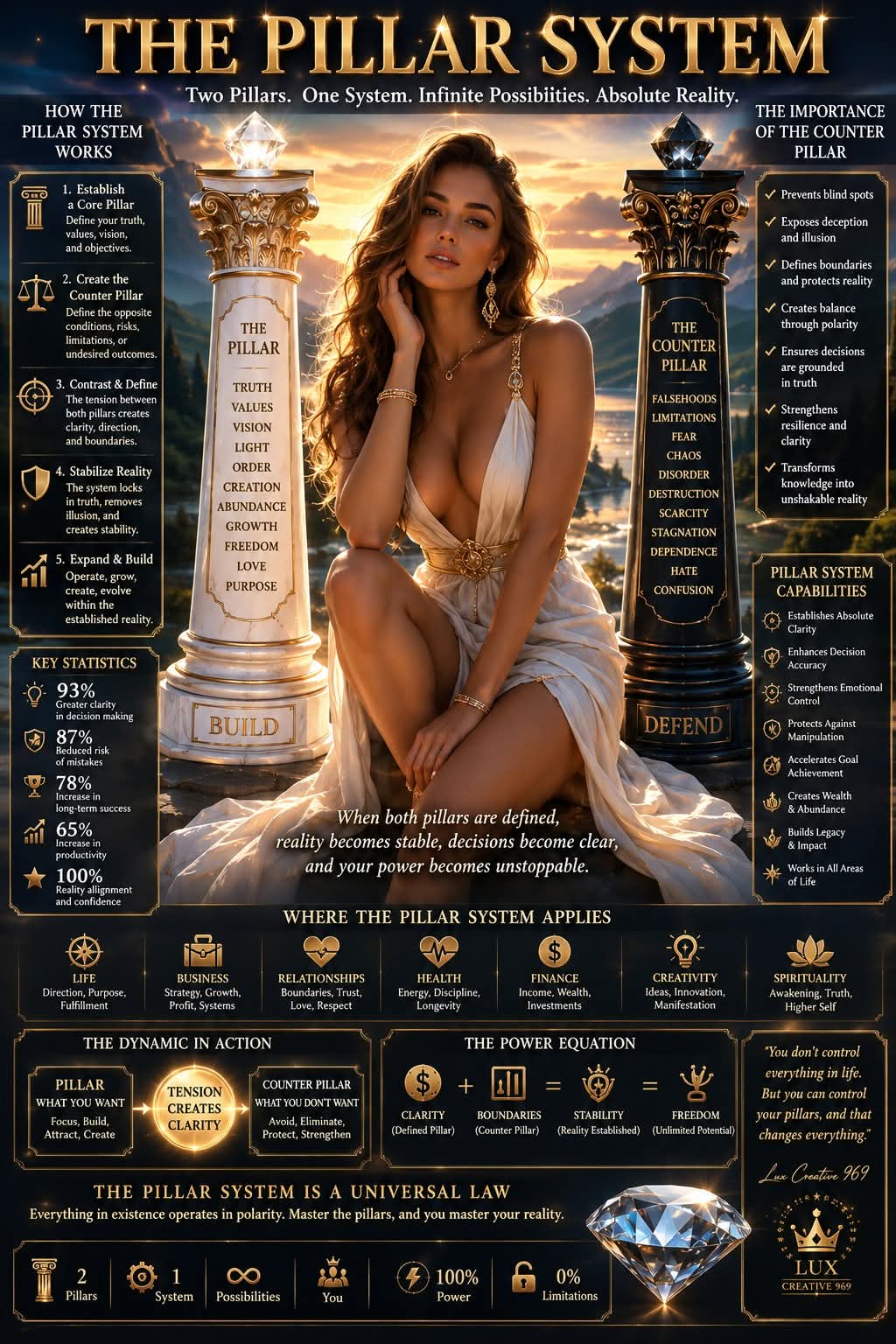
The Pillar System / Lux Creative 969
Two pillars / one review loop
Make the best responsible case for a claim. Define it, identify the purpose it serves and gather evidence that another person can inspect.
Make the strongest good-faith case against it. Look for missing context, conflicting evidence, practical limits and alternative explanations.
Keep only the conclusion that survives both sides. The result may be a stronger claim, a narrower claim, an unresolved question or a changed direction.
The working method
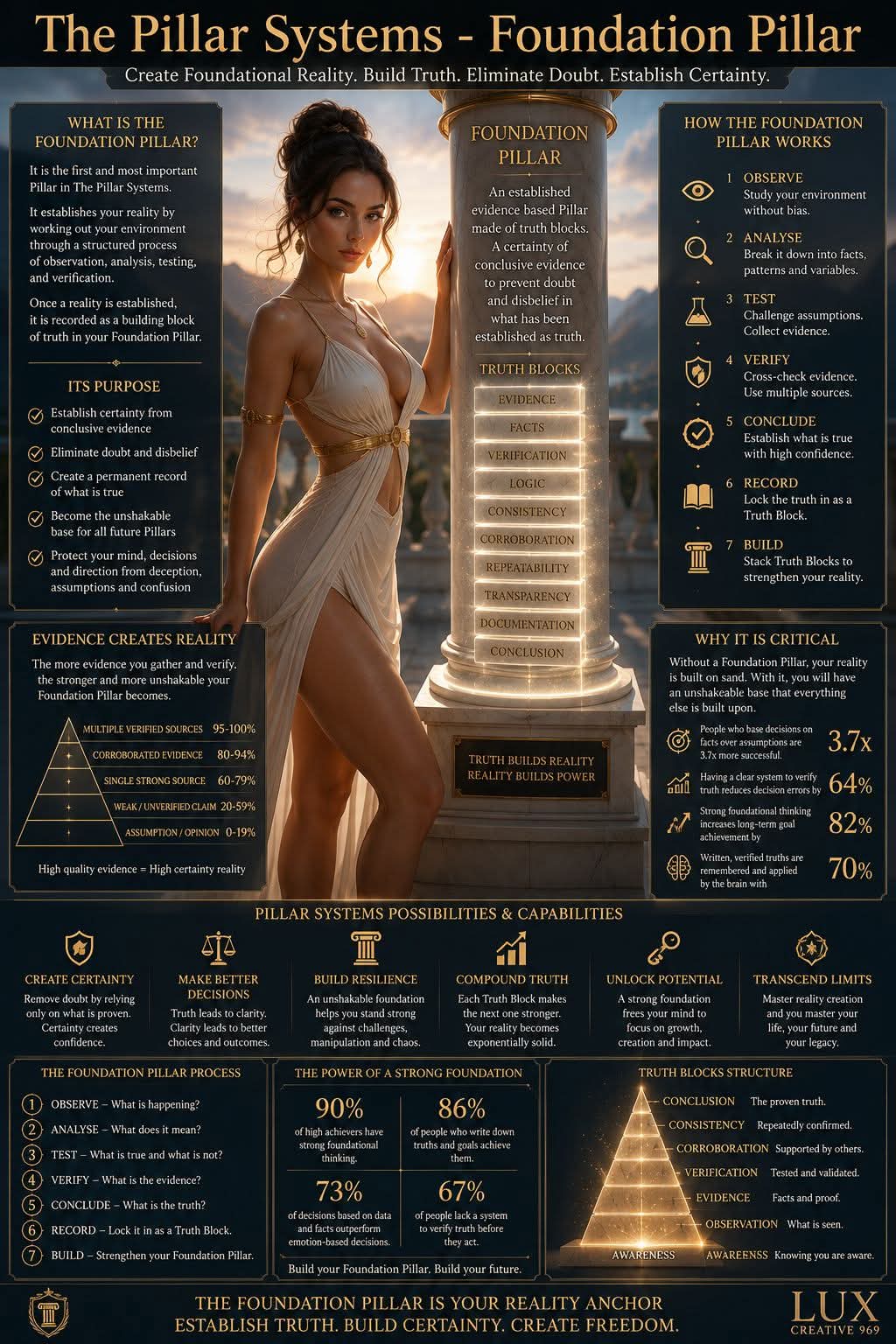
Write the claim, purpose or value precisely enough that a different person could test it.
Collect observations, sources, examples and reasoning that support the claim. Keep source, date and confidence visible.
Actively seek the strongest alternative explanation, limitation, exception or consequence that could weaken the case.
Compare quality, relevance, corroboration and uncertainty. Do not treat confidence, tradition or repetition as proof by themselves.
Keep the conclusion proportionate: supported, uncertain, revised or rejected. Preserve why it currently holds.
Choose the smallest responsible next action, observe the result and reopen the pillar when meaningful new evidence arrives.
Foundation pillar
A foundation is not an untouchable belief. It is a documented current understanding: clear enough to guide action, open enough to be corrected.
A short review card
What exactly am I saying is true, useful or worth protecting?
What is the strongest reliable evidence in favour of it?
What would a fair, informed critic say against it?
Where does the claim stop applying, and what remains unknown?
What action is justified at the current level of confidence?
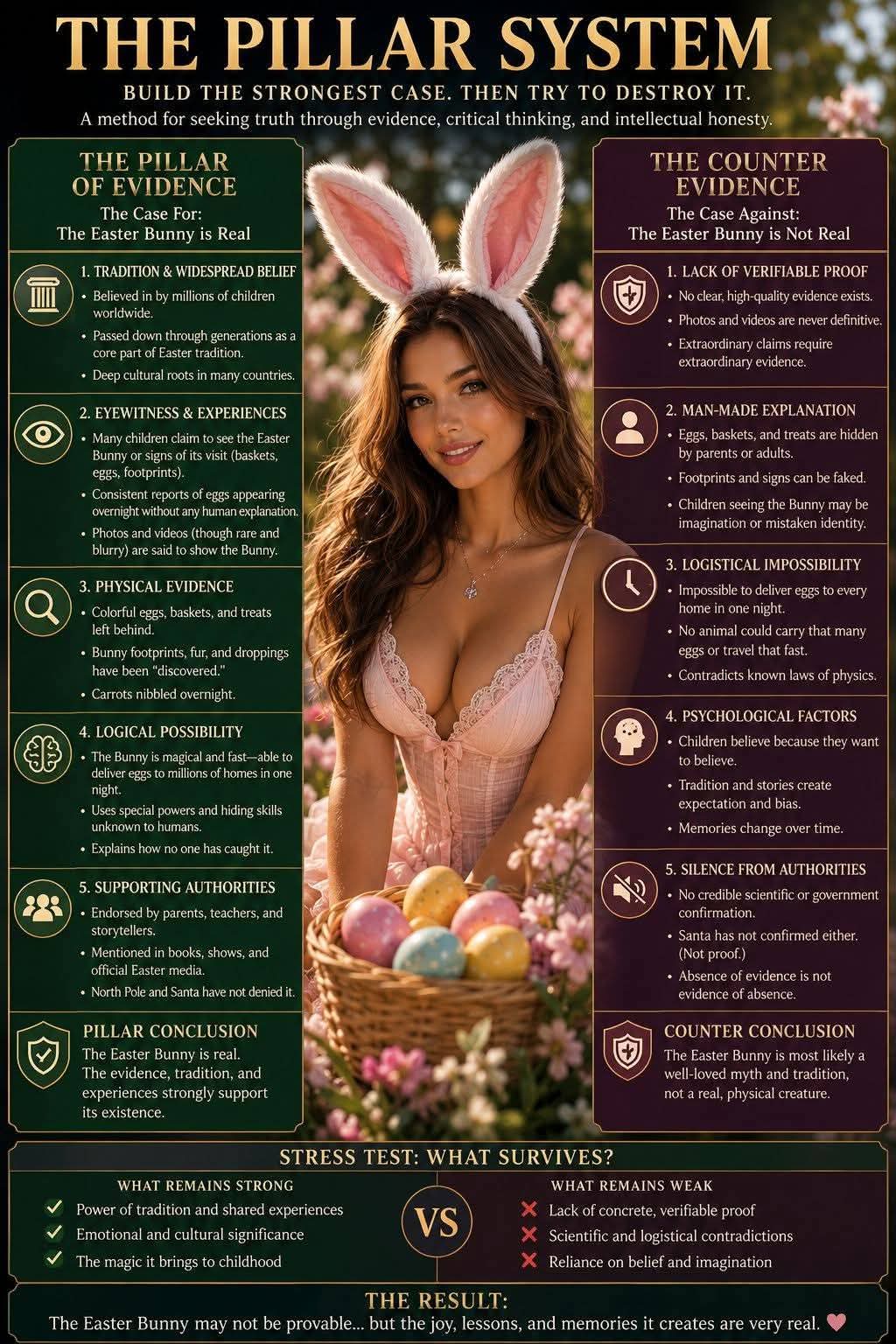
The stress test
The framework does not require every important experience to become a factual claim. It asks a simpler question: what kind of statement is this, and what evidence would be appropriate for it?
A living practice
The Pillar System belongs beside the Lux practices of observation, agency and accountable creation. It is a way to make decisions clearer without pretending that every question has a final answer.